










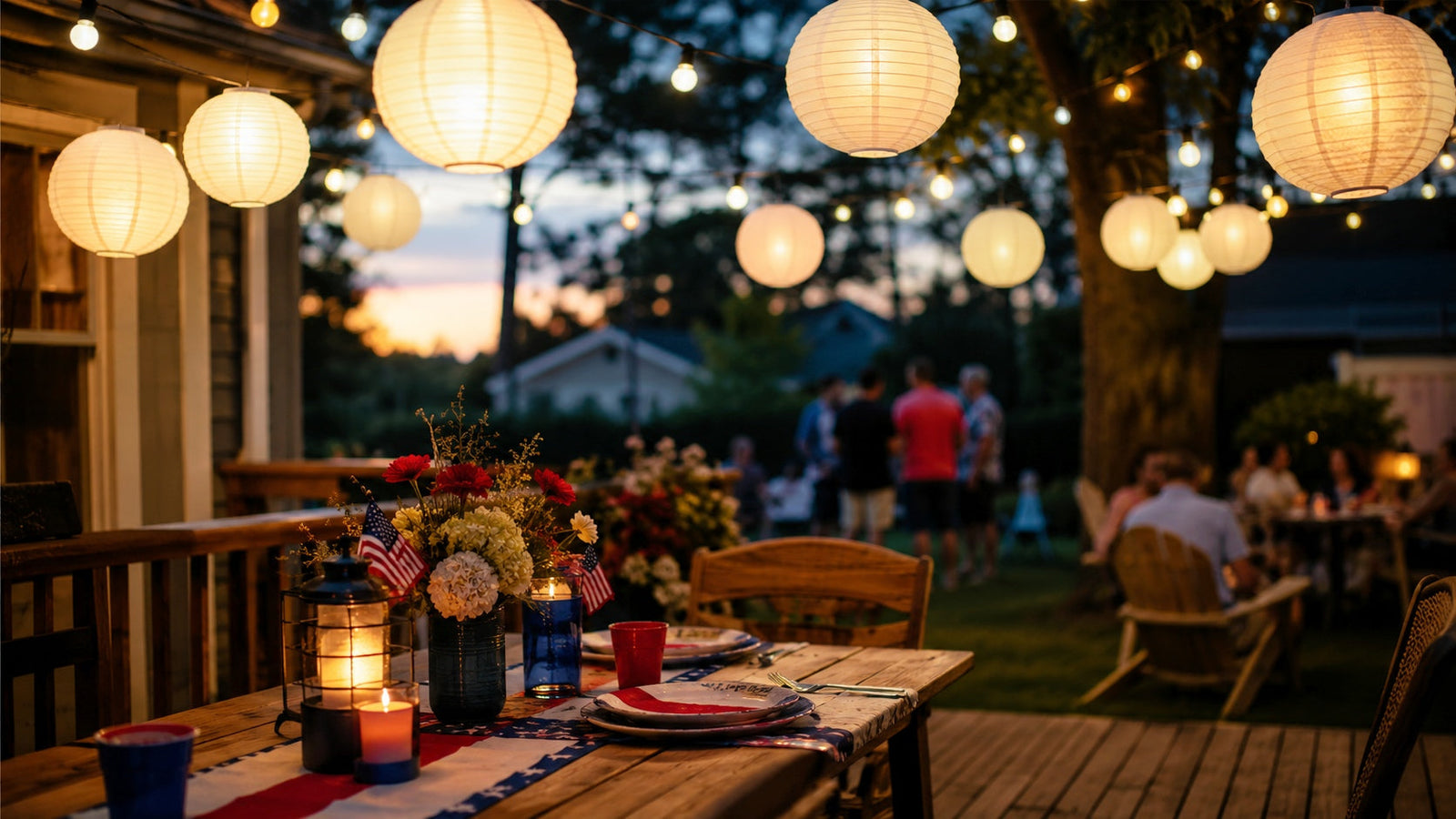


The question that stalls most backyard Fourth of July setups isn't color or theme — it's "did I order enough lanterns?" Buy too few and the yard looks bare after dark. Buy too many and half the box sits in the garage until next summer. The honest answer is that lantern count tracks your yard size, not your guest list. Below are real counts for three common backyard sizes, the sizes to mix, and how to light them when the nearest outlet is 40 feet away.
The Quick Answer: Lantern Counts by Yard Size
Use these as a starting point, then add or subtract based on how much of the space you actually want lit:
- Small deck or patio (up to ~200 sq ft, roughly 10×20): 8–12 lanterns. Mix mostly 8" and 14".
- Mid-size backyard (~400–600 sq ft): 15–24 lanterns. Spread across 8", 14", and 18".
- Large yard or open lawn (800+ sq ft): 30–40+ lanterns. Same mix, plus two or three 30" statement lanterns as anchors.
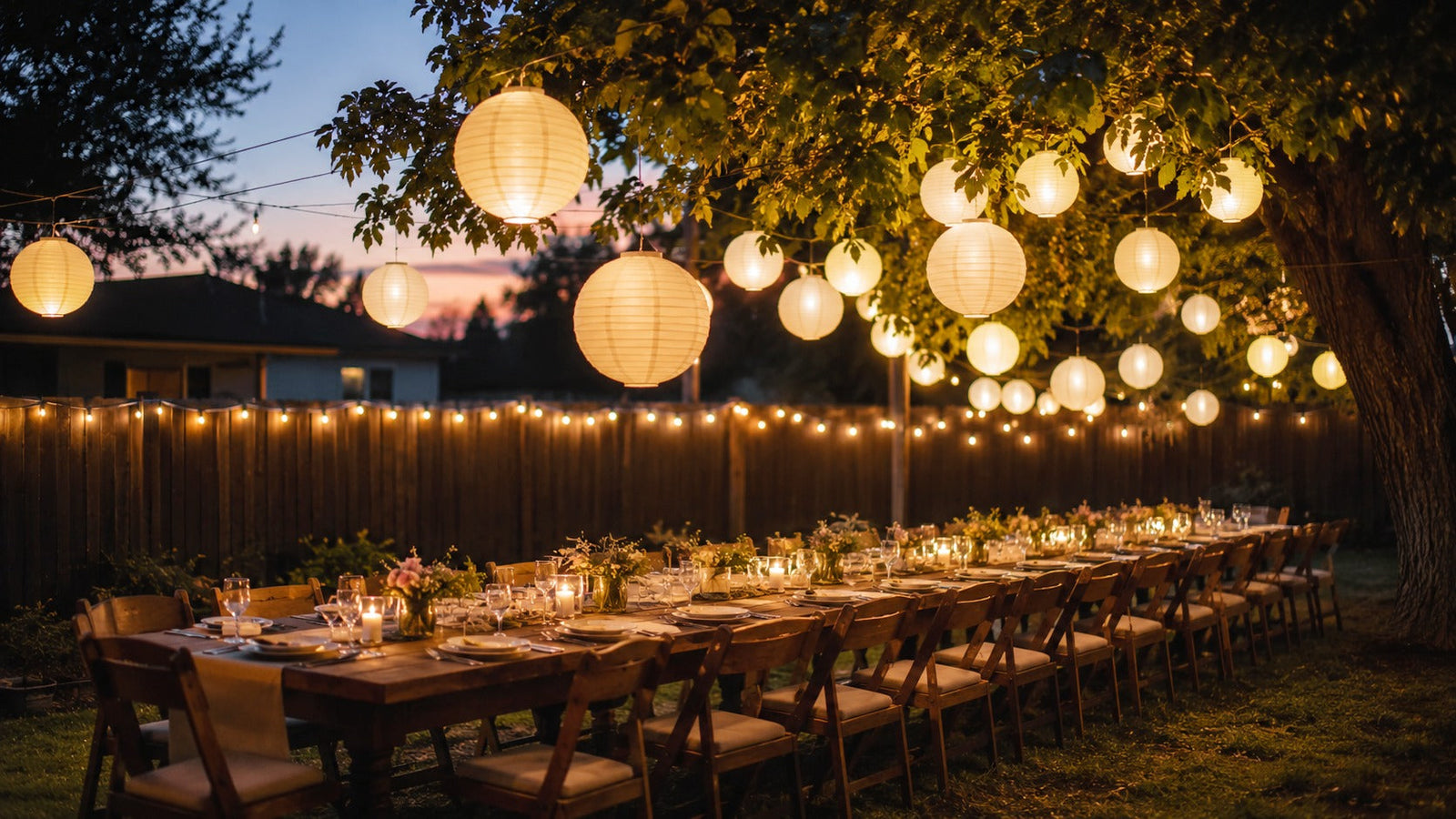
A practical rule for hanging along a line: space lanterns about every 3 feet, so a 20-foot string holds 6–7 of them. Two 20-foot runs across a mid-size yard already gets you to a dozen before you touch the trees or pergola.
What Sizes to Mix (and Why Not to Buy One Size)
A wall of same-size lanterns reads flat. Depth comes from mixing. A reliable ratio is about 50% mid-size, 30% small, 20% large:
- Small 6"–8" white round lanterns — fill gaps and cluster tightly near seating.
- Mid-size 14"–18" white round lanterns — your workhorses; these do most of the visual lifting.
- Large 30"–36" statement lanterns — one or two over the food table or entry to draw the eye.
Hang them in odd-numbered clusters (3s and 5s) at staggered heights. Odd groupings and varied drops look intentional; even, level rows look like a store display.

Lighting Them With No Outlet Nearby
This is where most backyard plans break down. Running an extension cord across a lawn is a trip hazard, and an open flame inside a paper lantern is a hard no. The fix is a battery light made for the job: a warm-white MoonBright LED lantern light with a remote drops inside each lantern, runs on batteries, gives off no heat, and turns the whole yard on from one remote.
Plan one LED per lantern. The kits come in 3-packs, so a 24-lantern yard needs eight 3-packs (or a single bulk 10-pack plus a few singles). Warm white reads softer and more flattering after dark than cool white — it's the same tone as string-light bulbs, so everything matches.
A Red, White, and Blue Palette That Isn't Tacky
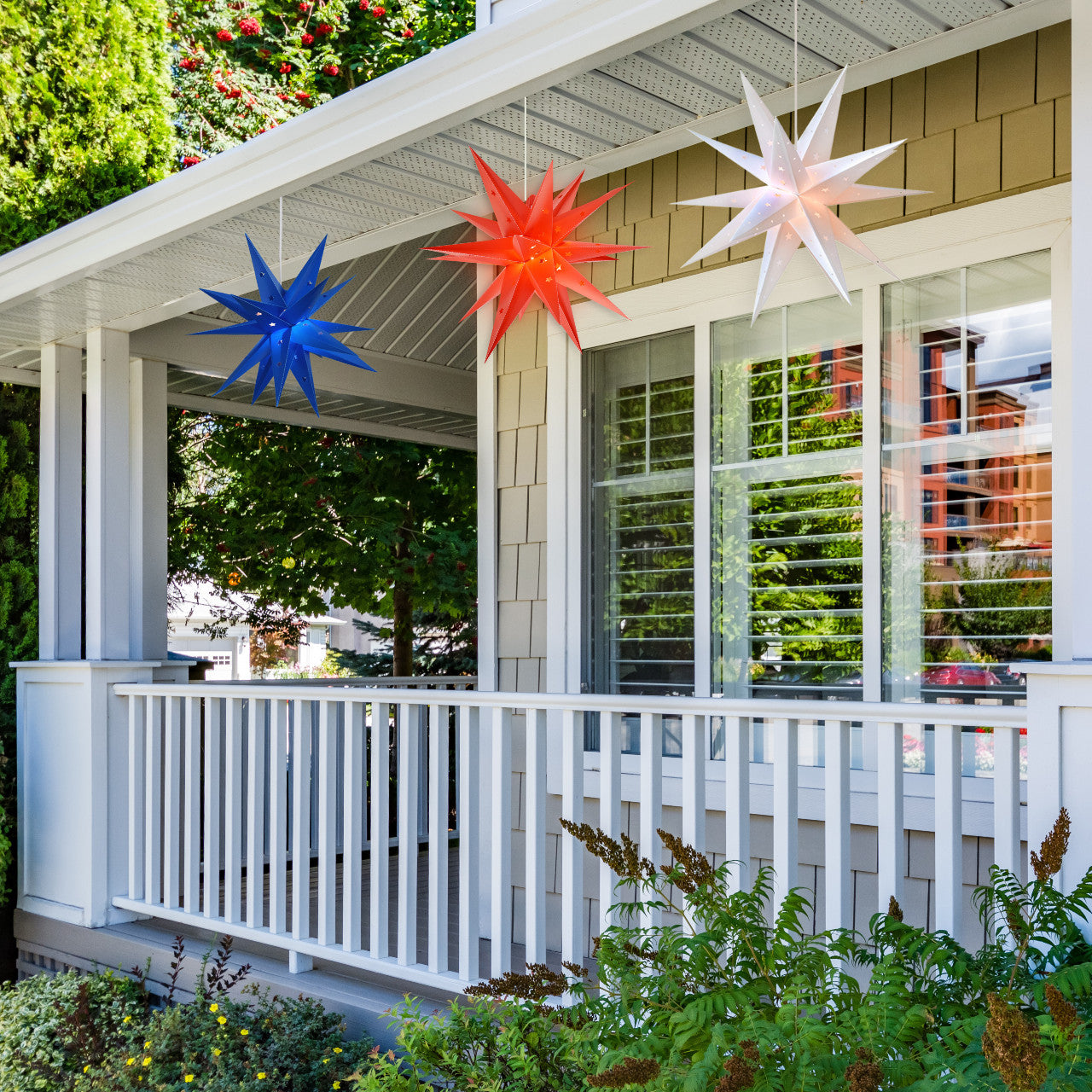
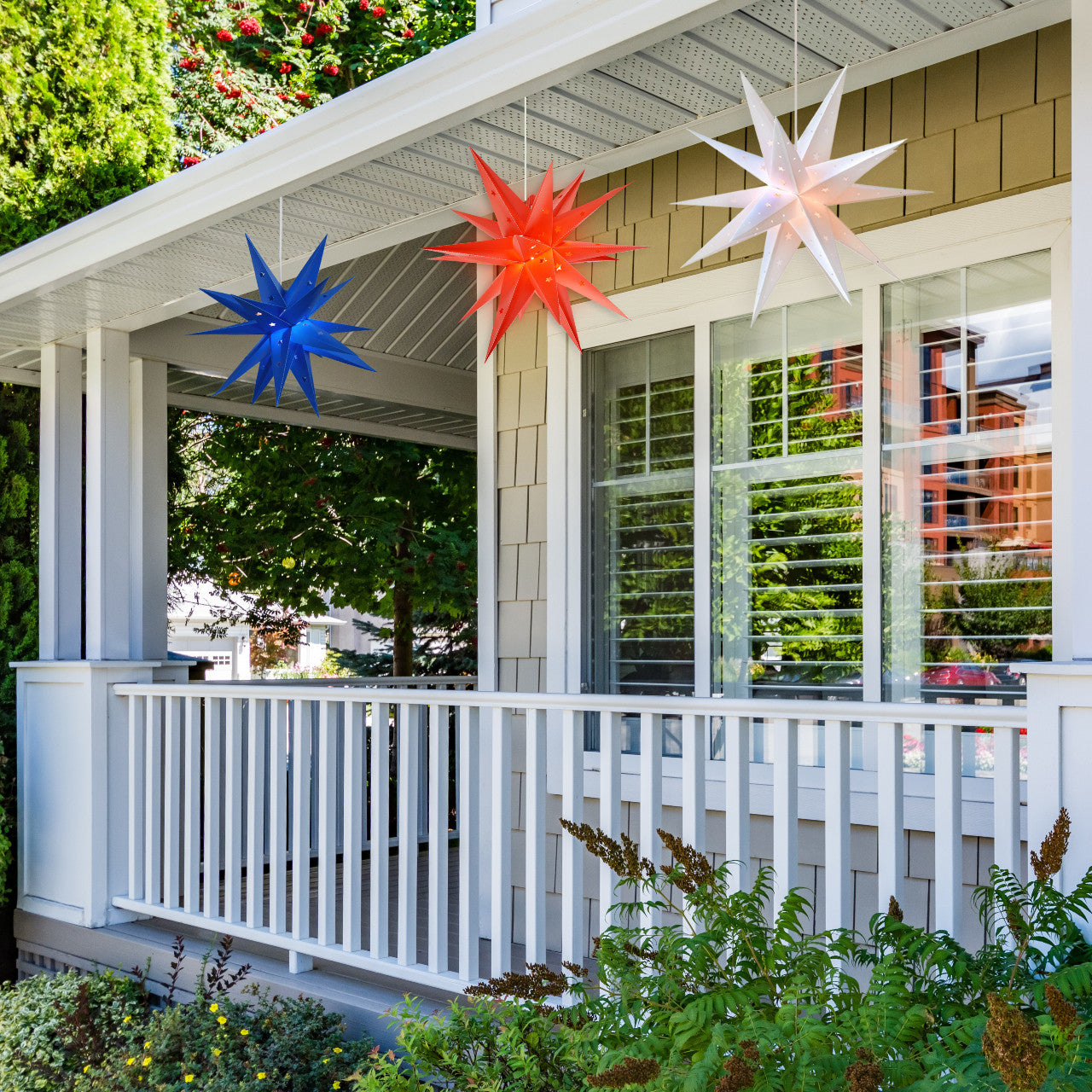
You don't need every lantern to be patriotic. Lead with white as 70–80% of the count — white glows the cleanest at night and photographs best — then add red and blue as accents on the table linens, a few smaller lanterns, or the string-light run. An all-white canopy with red-and-blue touches at eye level looks finished; a 50/50 red-white-blue lantern mix tends to look like a clearance bin.
Hanging and Weather: The Honest Limits
Paper lanterns are built for indoor or covered-outdoor use. A few things to plan around:
- They are not waterproof. A surprise shower will pucker the paper. If rain is in the forecast, hang under a pergola, tent, or covered patio — or be ready to take them down.
- Wind is the bigger enemy than people expect. In an exposed yard, cluster lanterns closer to structures and use fishing line or zip ties, not just the wire hook, on anything above 18".
- The LED kit is the electrical part, not the lantern — the paper shade itself isn't a rated fixture. Stick to the battery LEDs and skip any plug-in bulb inside a paper shade.
- Set up the morning of. Paper lanterns pop open in seconds and store flat, so there's no reason to fight the weather the night before.
A Sample Mid-Size Yard Order
For a ~500 sq ft backyard hosting 20–30 people, a clean starting order looks like:
- 6 × 8" white lanterns
- 12 × 14"–18" white lanterns
- 2 × 30" white statement lanterns
- 20 × warm-white LED lights (one per lantern, with a couple spare)
That's 20 lanterns lit end to end for well under most decor budgets, and everything but the batteries stores flat for next year.
Frequently Asked Questions
How many paper lanterns do I need for a small backyard?
For a deck or patio up to about 200 square feet, plan on 8 to 12 lanterns, mostly 8" and 14" sizes. Cluster them over the seating and dining area rather than spreading them thin across the whole space — concentrated light reads better at night than a few scattered lanterns.
Can paper lanterns stay outside overnight or in the rain?
They're made for dry, covered outdoor use. They aren't waterproof, so an overnight dew or a passing shower can warp the paper. Hang them under cover if you're leaving them up, and bring them in — or take them down — if real rain is coming.
What's the best way to light paper lanterns without an outlet?
Use a battery-powered LED lantern light, one inside each lantern. A warm-white LED with a remote lets you turn the whole display on at once, gives off no heat, and avoids running cords across the yard. Never use a candle or open flame inside a paper lantern.
What sizes of paper lanterns should I mix?
A good ratio is roughly half mid-size (14"–18"), a third small (6"–8"), and a few large (30"+) as anchors. Hang them in odd-numbered clusters at staggered heights for a fuller, more intentional look.
Paper Lantern Store is the world's largest selection of paper lanterns, lights, and decor — 24 years of fast shipping from our Union City, California warehouse.