















You have a Sunday afternoon, a room that smells like floor wax, and a budget that is really just your own checking account. That is the honest version of classroom decorating, and it is the version this guide is written for. The good news is that hanging things from the ceiling is the highest-impact, lowest-effort move available to you — a bare ceiling is the largest blank surface in the room and nobody else is competing for it.
Below is what actually works, with real prices, so you can decide what a room is worth to you before you put anything in a cart. Everything named here was in stock when this was written. A full ceiling comes in around forty-six dollars.
Start with the ceiling, not the walls
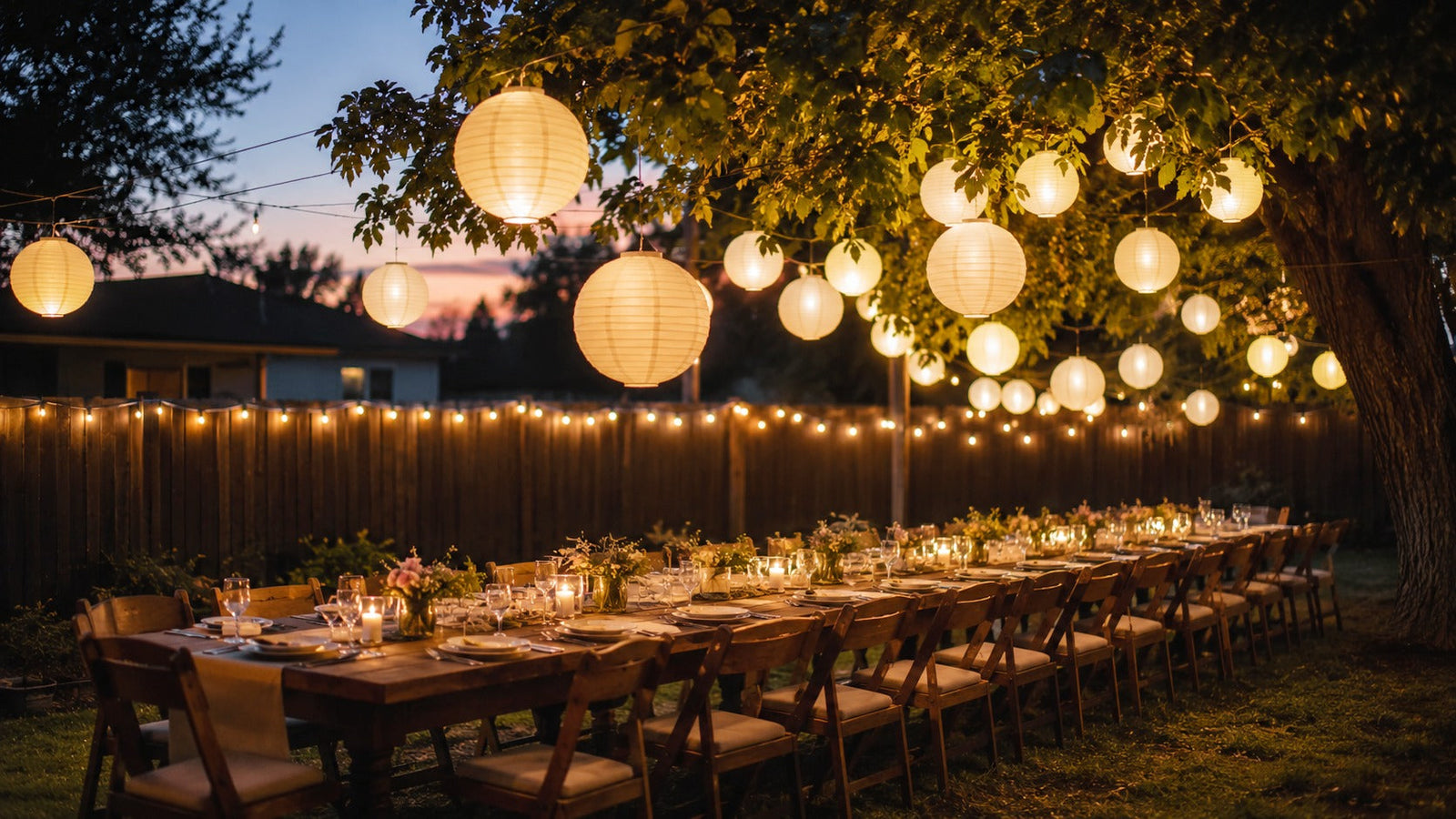
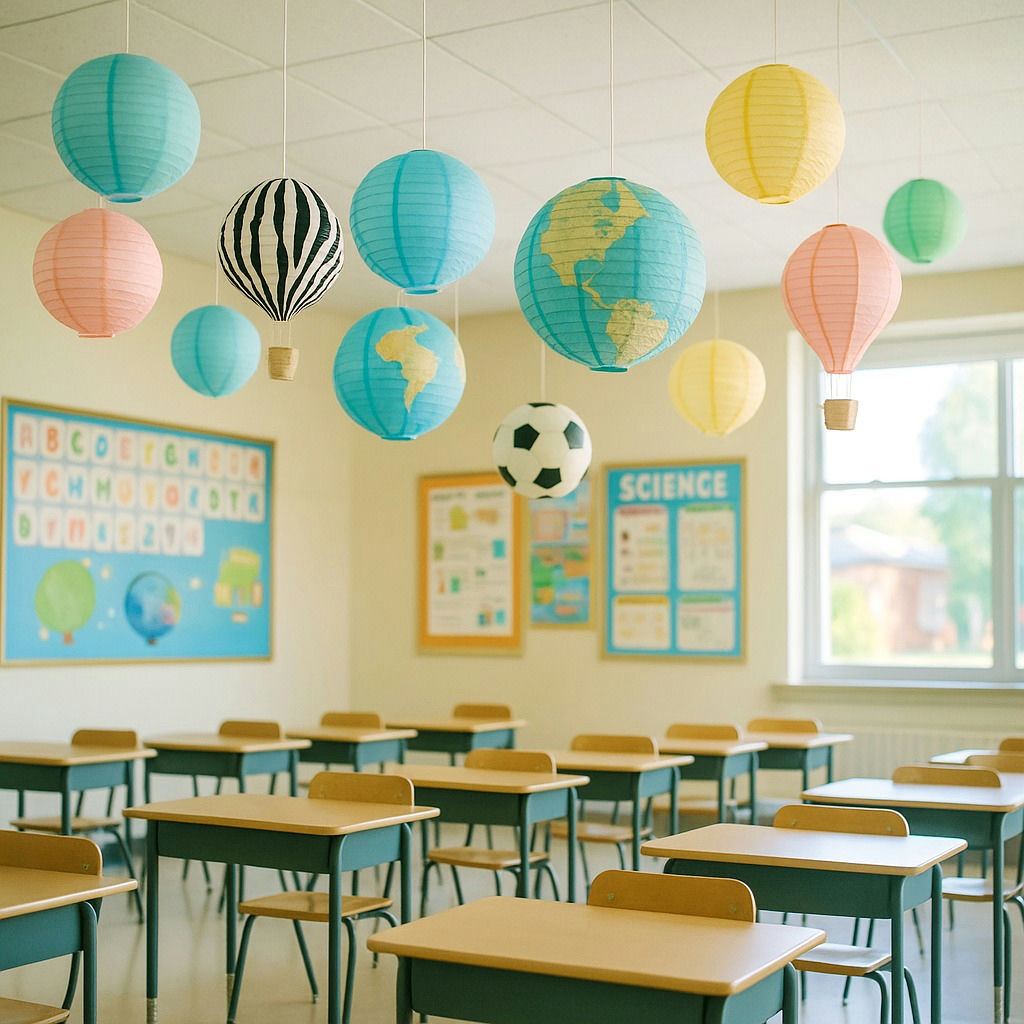
Bulletin boards eat entire weekends. A ceiling takes an hour. Hang lanterns in a loose diagonal band running from the door toward the reading corner rather than in a tidy grid — the eye follows a diagonal into the room, and an uneven line hides the fact that ceiling tiles are never quite square. Three sizes mixed together look considered; one size repeated looks like a store display.
Vary the drop lengths too. If every lantern hangs at the same height it reads as a ceiling treatment; if the drops range from eight inches to two feet it reads as weather, which is much nicer to sit under. Hang the lowest ones where nobody walks.
The project that doubles as a first-week icebreaker
The single best thing in the catalog for a classroom is not a decoration, it is an activity that becomes one. The animal face lantern kits are eight-inch paper lanterns that ship with the face pieces to assemble — ears, eyes, snout — so each child builds a dog, a cow, a sheep, a mouse. They are $2.40 each. A class of twenty-four costs $57.60 and gives you both a first-week project and a ceiling.
Nine animals are available: dog, mouse, chicken, cow, monkey, sheep, rabbit, pig, and tiger. Each comes in a range of lantern colors and not every color is stocked for every animal — on the dog kit, for example, turquoise, navy, and gold are deep while pink, yellow, and beige are out — so pick the color on the product page rather than assuming. If you want them uniform, choose one color and check that it is available before you order for the whole class.
A practical note from teachers who have run this: assemble one yourself first, at your own table, before you hand out twenty-four of them. It takes four minutes and it changes what you say to the room.
Lanterns that teach something
A few lanterns earn their place by being curriculum rather than decor. The world map globe lantern is fourteen inches of printed continents for $3.29, and it does more work hanging over a geography unit than any poster at three times the price — children point at things hanging over their heads.
For a unit on Japan, seasons, or simply for a room that needs a focal object, the koi fish pond lantern is $2.56 and the crane and cherry blossom lantern is $3.14. There are a lot more in the fourteen-inch patterned range if a specific theme is what you need.
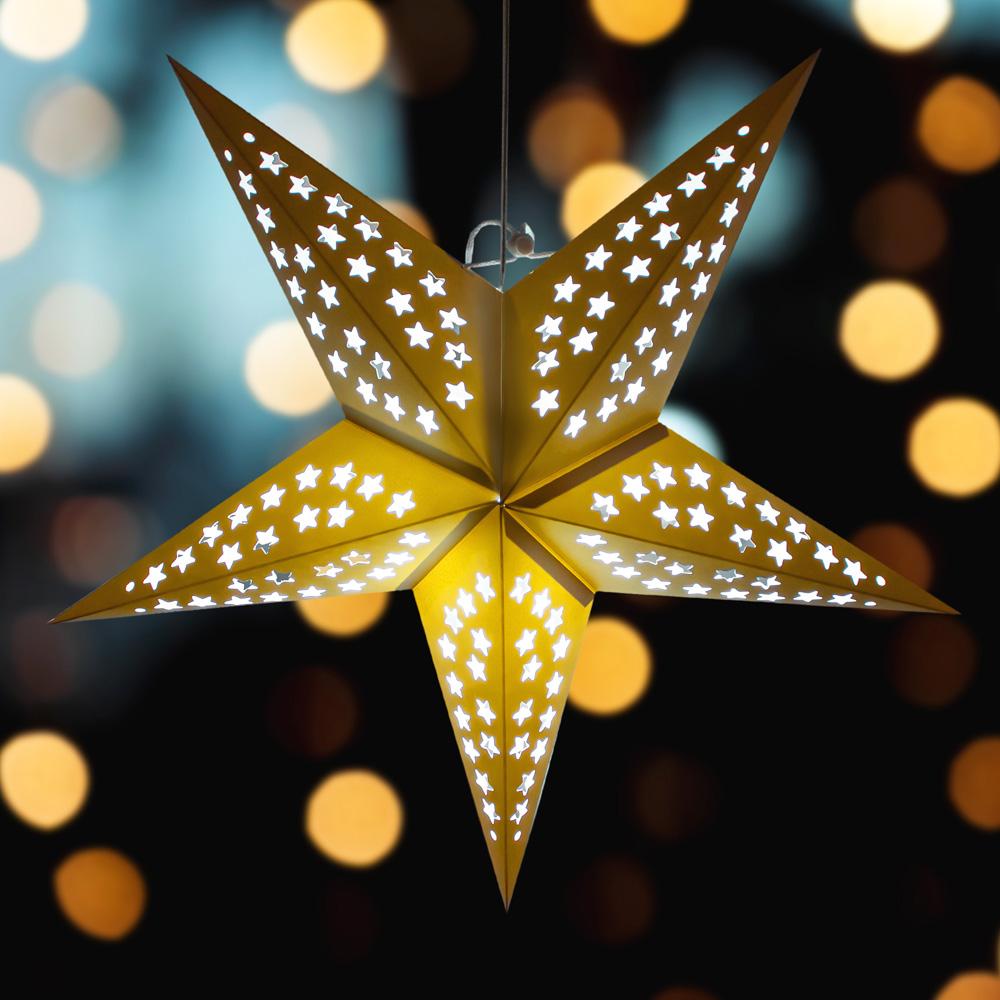
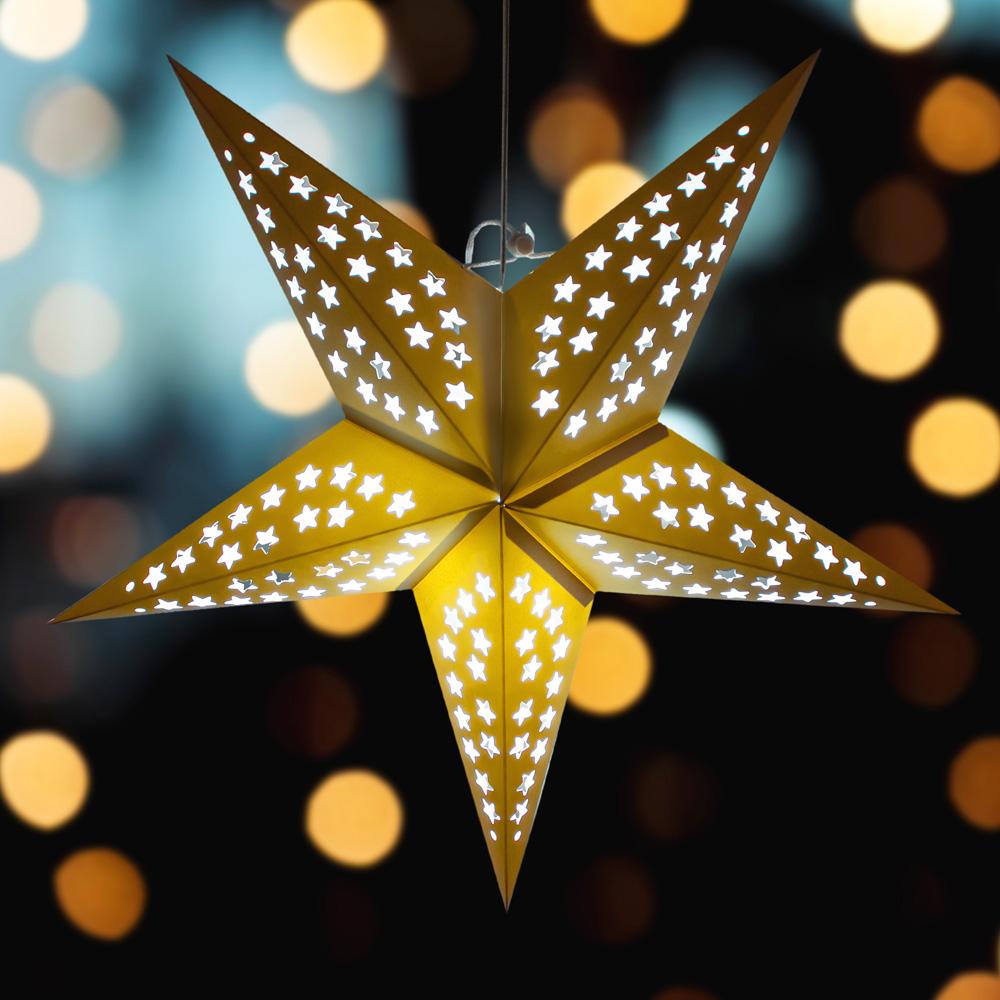
One more that surprises people: the twenty-four-inch silver glitter star at $4.95. It is much larger than the round lanterns and it catches whatever light the room has. One star hung centrally does more than six small lanterns scattered around it, and it stays up through winter without looking seasonal.
Color-code your classroom zones
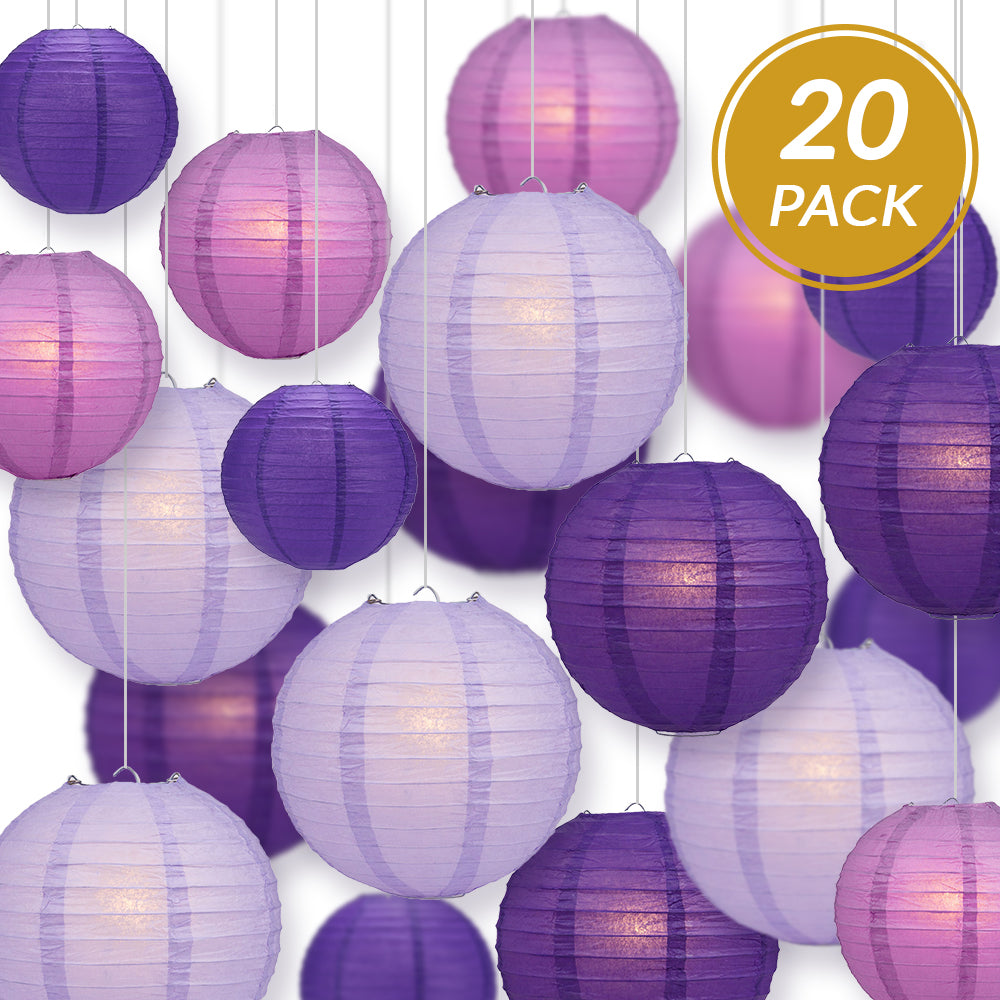
This is the trick worth stealing. Assign each area of the room a color and hang lanterns in that color directly above it — orange over the maker table, purple over independent reading, black over the science bench. Children orient by color faster than by signage, and after a week you can say "go to the orange" and it works.
The economics are friendly. Twelve-inch lanterns in persimmon orange and royal purple are $1.53 each — twelve of them for under twenty dollars, which covers a zone with a few spare. Ten-inch orange is $1.38 and eight-inch black is $1.08, so a mixed cluster of three sizes in one color runs about four dollars. Gold is $2.08 and worth the premium in exactly one place — over your own desk or the door — because a metallic finish loses its effect when it is everywhere.
The reading corner
Every other zone in the room is competing for attention. The reading corner should be doing the opposite, and that changes what you hang there. Skip the bright colors entirely. One or two lanterns, low, in something quiet — the midnight koi lantern at $2.85 is dark and slow-patterned in a way that reads as calm rather than busy, and the crane and cherry blossom works the same way.
Hang them lower than you think — around six and a half feet, low enough that a child sitting on the floor sees them as a ceiling of their own rather than as part of the room. That drop is the whole effect. A corner with a low ceiling feels like a den; the same corner with lanterns at standard height feels like the rest of the classroom with extra decoration in it.
The rest is soft things you almost certainly already own: a rug, two cushions, a folded blanket over the back of a chair. Fabric absorbs sound, and a quiet corner stays quiet partly because it sounds quiet. If you are building this corner properly rather than temporarily, texture is what makes it work — but that is a longer conversation and one worth having in September, once the term has settled and you know where the children actually choose to sit.
Light without a flame
No open flame, ever, and no candles of any kind — that part is not negotiable in a room with children in it. What works instead is threading a strand of fairy lights through a lantern so the paper glows from inside. The battery fairy string lights are $4.26 for a seven-and-a-half-foot strand of twenty LEDs on a silver wire, thin enough to feed through a lantern's top opening and stiff enough to stay where you put it.
The light is cool white rather than warm, so it works better as twinkle inside a patterned lantern than as mood lighting for the whole corner. Two strands are plenty for a room. Battery-powered means no cord running down a wall, which matters more than it sounds — a trailing cable is the reason most ceiling lighting ideas get taken down in week three. There are other lengths and colors in the fairy light range if you want a longer run.
For something children can carry, the assorted eight-inch lantern holder sticks come twelve to a pack for $21.08 — that is $1.76 per child for a handheld lantern with a small LED at the tip. These are made for a lantern walk rather than for hanging, and they turn an evening open house or an autumn festival into something children remember. There is also a separate six-pack of twelve-inch red sticks at $11.83 if you need fewer, or need them longer.
How to actually hang them
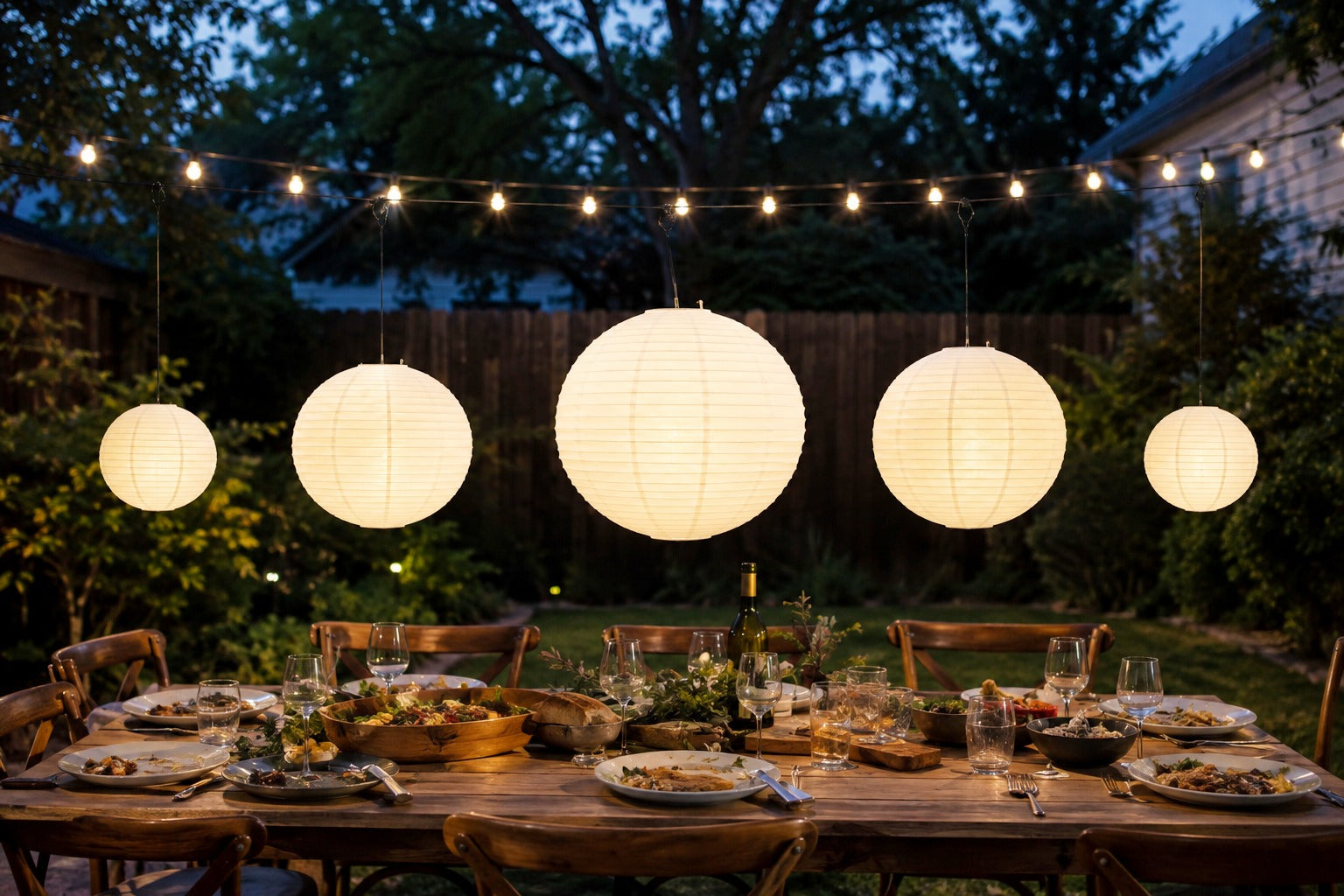
Use fishing line. It is $1.43 for a hundred feet, it holds a paper lantern easily, and it is close enough to invisible that the lanterns appear to float. Yarn and string both read as clutter from across a room and both sag within a week. This is a dollar and a half that changes how the whole ceiling looks.
For attachment: if you have a drop ceiling, T-bar clips are the answer and they leave no mark at all. If you have a hard ceiling, removable adhesive hooks rated for a pound are more than enough — a paper lantern weighs a few ounces — but press them on a clean, dry surface and give them the full hour before you hang anything, because the failure mode is always impatience rather than weight. Never use a thumbtack in a ceiling tile above a place a child sits.
Check with your building before you start. Many districts require decorations to stay a set distance from sprinkler heads, usually eighteen inches, and some cap the percentage of ceiling that may be covered. Ask once in August rather than being asked to take it down in October.
What a whole room costs
Concretely, so you can decide before you start. Twelve persimmon orange twelve-inch lanterns at $18.36, twelve royal purple at $18.36, the world map globe at $3.29, the silver glitter star at $4.95, and a hundred feet of fishing line at $1.43. That is $46.39 for two color-coded zones, a focal star, a teaching object, and enough line to hang all of it twice.
Add the animal face kits for a class of twenty-four and you are at $103.99 for the room plus a first-week project that every child takes ownership of. Skip the kits and swap in two more colors of twelve-inch lanterns and you have four zones for under seventy dollars. None of this needs to happen in one weekend, and the lanterns that are up already make the room look finished while you decide about the rest.
Frequently asked questions
How do I hang paper lanterns from a classroom ceiling without damaging anything?
Fishing line tied to T-bar clips if you have a drop ceiling, or to removable adhesive hooks rated for one pound if you have a hard ceiling. Both come down at the end of the year with no mark. Avoid staples and thumbtacks in ceiling tiles, and never put a fixing directly above a seat.
Are paper lanterns safe in a classroom?
Yes, with two rules. No flame of any kind inside or near them — use battery fairy lights if you want a glow. And keep them the distance your district requires from sprinkler heads, commonly eighteen inches. Check your building's decoration policy in August; the rules vary by district and are easier to follow than to undo.
How many lanterns do I need for one classroom?
Twenty to twenty-four covers a standard room comfortably if you cluster them rather than spreading them evenly. Twelve is enough for a single zone or a reading corner. Buying in one size is cheaper; mixing eight, ten, and twelve-inch looks noticeably better and costs about the same.
Can students decorate the lanterns themselves?
That is what the animal face DIY kits are for — each child assembles their own eight-inch lantern from the included face pieces. For plain lanterns, children can add names, goals, or vocabulary with markers or paper cut-outs, but glue in quantity will warp the paper, so keep additions light and dry.
When should I put them up?
Before the first day, if you can. A room that is already decorated on day one sets a different tone than a room that gets decorated during week two. If you are short on time, do the ceiling over the door and the reading corner first and leave the rest until you know how the room is being used.
Paper Lantern Store is the world's largest selection of paper lanterns, lights, and decor — 24 years of fast shipping from our Union City, California warehouse.